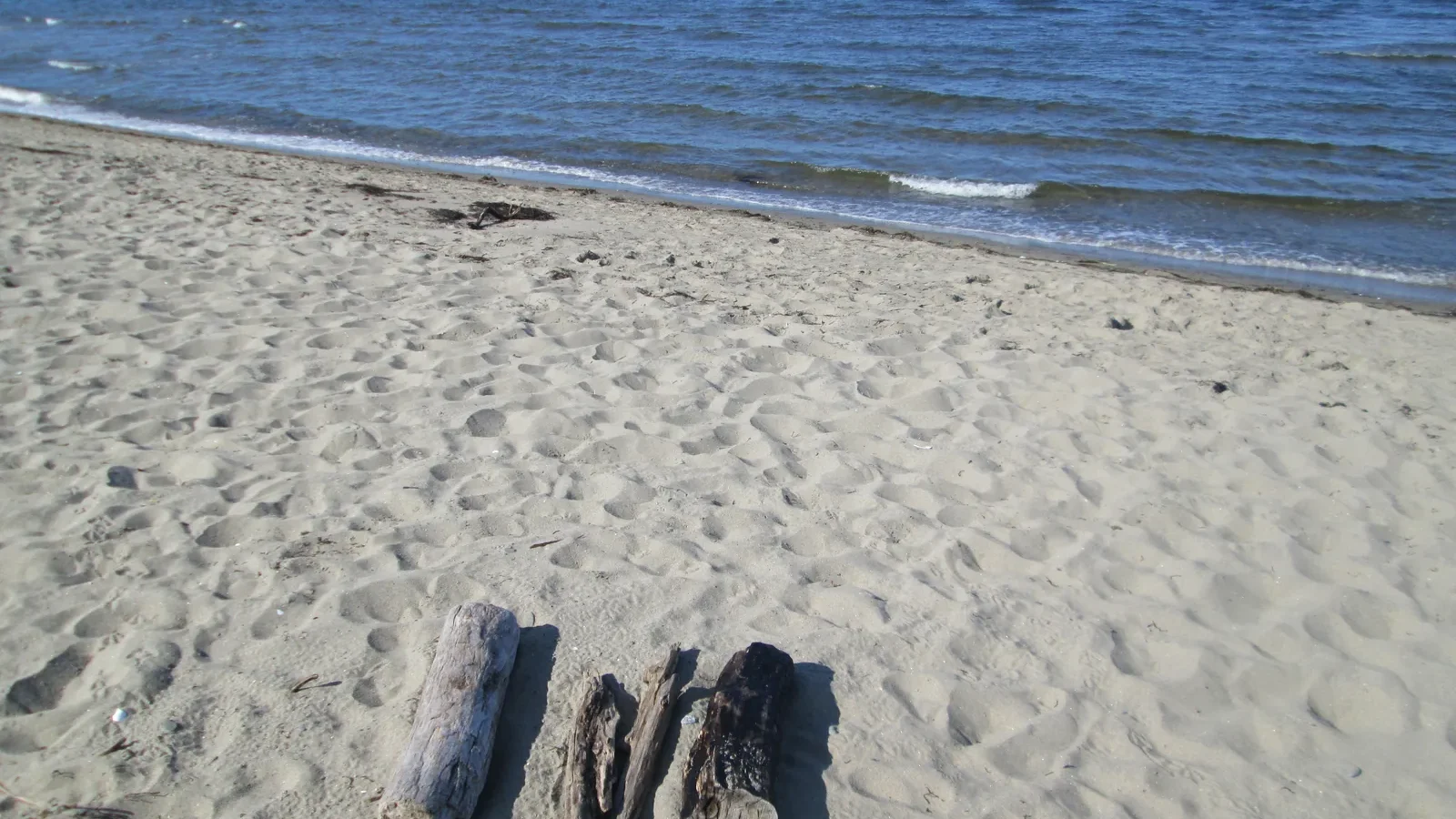
If you’re looking for the warmest beaches in New Brunswick, the first decision is which coast. Down south, the Bay of Fundy is famous for its tides, but few people swim there. Along the east side of the province, the Acadian coast lines up mile after mile of soft sand on the Northumberland Strait and the Gulf of St. Lawrence. That’s where Tourism New Brunswick places “the warmest saltwater beaches in Canada.”
This guide covers eight beaches, from the southeast up to the Acadian Peninsula: what each one offers, whether it has lifeguards, whether dogs are allowed, and how long it takes to get there. For the big picture, see our New Brunswick hub and our list of things to do in New Brunswick.
At a glance
- Where to swim warm: the Acadian coast, especially along the Northumberland Strait (Shediac, Cap-Pelé, Murray Corner, Bouctouche, Kouchibouguac).
- Water temperature: up to 29°C (84°F), according to Tourism New Brunswick. That’s a peak, not an average.
- When: July and August, when seasonal services (lifeguards, canteens) are running.
- Lifeguarded beaches: Parlee (Shediac), Kellys (Kouchibouguac) and Youghall (Bathurst) in season; the others are unsupervised.
- Water quality: provincial park beach results are public at beaches.gnb.ca.
- Skip for swimming: the Bay of Fundy, where the province describes the water as “extremely cold.”
In this guide
- Why is the water warmer on the Acadian coast?
- Warmest beaches in New Brunswick at a glance
- The southeast: Shediac, Cap-Pelé and Murray Corner
- Kent County: the dune and the national park
- The north: Acadian Peninsula and Chaleur Bay
- When to swim and how to check water quality
- Getting to the beaches
- A three-day Acadian coast beach plan
- FAQ
- Sources
Why is the water warmer on the Acadian coast?
Tourism New Brunswick gives two reasons. First, the middle stretch of the Acadian coast borders the Northumberland Strait, a shallow body of water that warms up quickly under the summer sun. Second, it points to the Gulf Stream, the warm current that travels up North America’s east coast. By its definition, the Acadian coast runs roughly from Dalhousie down to Murray Corner.
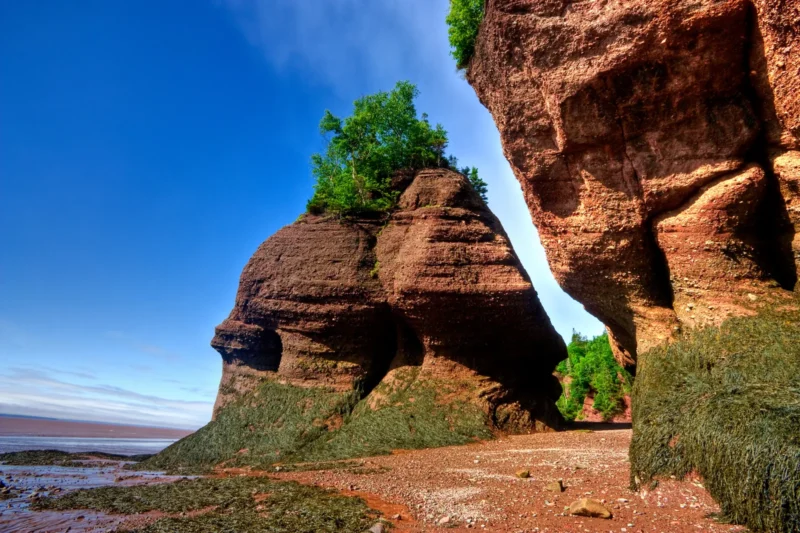
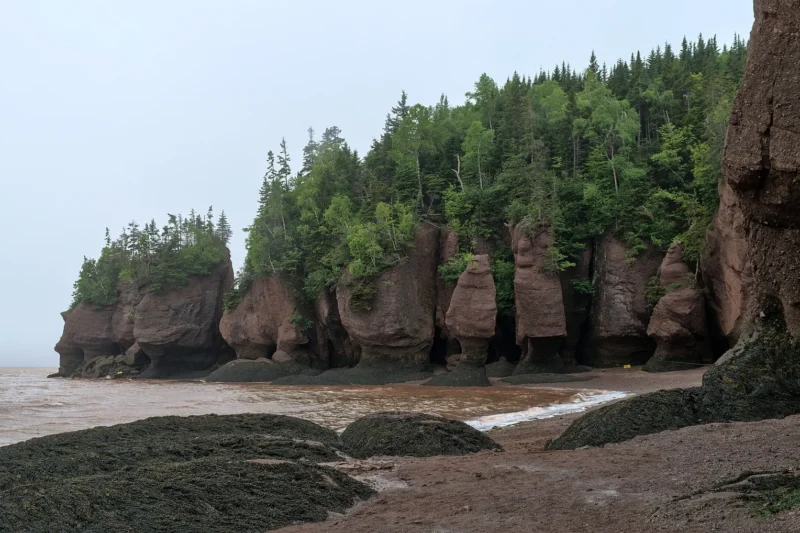
The contrast with the Bay of Fundy is stark. In its beach monitoring protocol, the Government of New Brunswick explains that it doesn’t sample water at Herring Cove, the Fundy Trail Parkway or Anchorage, partly because the water there is extremely cold and people don’t generally swim. Fundy is still a must for the tides (see our Bay of Fundy guide and our Hopewell Rocks guide), but for swimming, head to the other coast.
What “up to 29°C” really means
The 29°C (84°F) figure appears on Tourism New Brunswick’s official pages, which also describe the water as “warmer than anything north of Virginia.” Read it as a possible high on a hot summer day, not a guaranteed temperature for your swim. Wind, tide, depth and the previous days’ weather all change how warm a beach feels from one spot to the next and one week to the next. No official body publishes daily water temperatures for each beach, so if it matters to you, ask park staff when you arrive.
Warmest beaches in New Brunswick at a glance
| Beach | Area | Water | Lifeguards (summer) | Main facilities | From Moncton |
|---|---|---|---|---|---|
| Parlee | Pointe-du-Chêne (Shediac) | Northumberland Strait | Yes | Washrooms, change houses, Mobi-mat, campground | 30 km (19 mi), 30–40 min |
| Aboiteau | Cap-Pelé | Northumberland Strait | No (8 lifesaving stations) | Showers, restaurant, brewery, paid entry | 48 km (30 mi), 40–50 min |
| Murray Beach | Little Shemogue | Northumberland Strait | No | Change houses, washrooms, campground, cabins | 76 km (47 mi), 1 h – 1 h 15 |
| Bouctouche Dune | Saint-Édouard-de-Kent | Bouctouche Bay / strait | No | 800 m boardwalk, free | 61 km (38 mi), 45–55 min |
| Kellys | Kouchibouguac National Park | Northumberland Strait | Yes | Boardwalk, canteen, lagoons | 111 km (69 mi), 1 h 15 – 1 h 45 |
| Val-Comeau | Near Tracadie | Gulf of St. Lawrence | No | Change rooms, washrooms, playground | 218 km (135 mi), 2 h 45 – 3 h 15 |
| Miscou | Miscou Island | Gulf of St. Lawrence | No | Showers, boardwalk, lookout tower | 289 km (180 mi), 3 h 45 – 4 h 15 |
| Youghall | Bathurst | Chaleur Bay | Yes | Showers, canteen, volleyball, free | 232 km (144 mi), 2 h 45 – 3 h 15 |
Driving distances are approximate. Lifeguards and facilities are seasonal, so check with each site before you go.
The southeast: Shediac, Cap-Pelé and Murray Corner
This is the closest stretch to Moncton and the busiest. In a single day you can go from a big, lively beach to a quieter one with a view of the Confederation Bridge.
Parlee Beach (Pointe-du-Chêne)
Parlee Beach Provincial Park is the province’s headline beach. NB Parks calls it one of North America’s finest, with “the warmest salt water in Canada,” and it holds the international Blue Flag eco-certification. Tourism New Brunswick notes that the swimming area is supervised.
Practical points from NB Parks:
- A Mobi-mat runs from the sidewalk to the water for wheelchairs, walkers, Hippocampe beach chairs and strollers, and the new comfort station includes accessible washrooms and a gender-neutral family washroom.
- No dogs on the beach, except service animals wearing a service-animal vest.
- The campground has more than 210 sites, a 10-minute walk from the sand.
- Parking is charged by the day: in 2026, $17.83 per vehicle before tax (lower for New Brunswick residents). The park says this includes a beach nourishment fee that goes straight into maintaining the beach.
Grassy marshes flank both ends of the beach, good for spotting shorebirds and waterfowl. Downtown Shediac and its giant lobster sculpture are a few minutes away.
Aboiteau Beach (Cap-Pelé)
About 20 km (12 mi) east of Parlee, Aboiteau Beach was, according to Tourism New Brunswick, the first saltwater beach in Canada to earn Blue Flag certification, in 2018. It offers about 5 km (3 mi) of shoreline, a boardwalk, an on-site restaurant and brewery, and an observation tower for birders.
According to the beach’s website, the site is open daily from 9 a.m. to 8 p.m., from the first Friday in June to the second week of September, and admission starts at $10. The water is tested weekly. The site mentions eight lifesaving stations and staff trained in first aid, but not lifeguards, so keep children within sight at all times.
Murray Beach (Little Shemogue)
Farther east, Murray Beach Provincial Park looks out over the Northumberland Strait and the Confederation Bridge. NB Parks describes its warm salt water and its unsupervised sandy beach as perfect for beachcombing. The park also points to the large rocks eroding out of a red-soil hill as interesting to explore.
The park has change houses, washrooms, a playground and picnic areas, plus a 126-site campground and 8 cabins. Dogs aren’t allowed on the beach but are welcome on leash elsewhere in the park. The Cape Jourimain Nature Centre is close by, right before the bridge to Prince Edward Island.
Kent County: the dune and the national park
Bouctouche Dune (Irving Eco-Centre)
Just north of the town of Bouctouche, La Dune de Bouctouche is a sandspit about 12 km (7.5 mi) long that stretches across the bay. The Irving Eco-Centre, run by J.D. Irving, offers free public access. You’ll find:
- an 800 m (half-mile) boardwalk over the dune and salt marsh;
- a saltwater beach where swimming is permitted, unsupervised;
- picnic tables and a free gas barbecue;
- electric vehicle tours for visitors with limited mobility;
- a free kennel service, because pets aren’t allowed on the dune or boardwalk to protect the endangered Piping Plover, which nests here.
Kouchibouguac National Park: Kellys and Callanders beaches
Parks Canada says Kouchibouguac National Park is popular for its sandy beaches and warm coastal waters. Two beaches are groomed for visitors:
| Feature | Kellys Beach | Callanders Beach |
|---|---|---|
| Pets allowed | No | Yes |
| Interpretation programs | Yes | Yes |
| Canteen | Yes (usually mid-June to early September) | No |
| Lifeguards | Yes | No |
You reach Kellys Beach on a boardwalk of about 500 m over salt marsh and lagoons; Parks Canada’s trail listing gives 1.2 km (0.75 mi) one way for the full route, or 30 to 45 minutes. No bikes on the boardwalk. Behind the beach, the shallow lagoons are made for wading, and Parks Canada runs guided sessions to look for hermit crabs and sand shrimp. Respect the fences that protect Piping Plover nests.
Parks Canada puts the park about an hour’s drive north of Moncton and notes that Kellys Beach is busiest in July and August. In 2026, admission was free from June 19 to September 7; check next season’s fees on the park website. With kids, Kellys is the obvious choice since it’s the park’s supervised beach (confirm lifeguard hours at 506-876-2443); Callanders works if you’re travelling with a dog.
The north: Acadian Peninsula and Chaleur Bay
Farther north, the beaches face the Gulf of St. Lawrence or Chaleur Bay. They’re farther from Moncton but pair well with a stay in Caraquet or Shippagan.
Val-Comeau (near Tracadie)
According to Tourism New Brunswick, Val-Comeau Beach is a 2 km (1 mi) stretch of golden sand backed by tall dunes and washed by breakers from the Gulf of St. Lawrence. It’s unsupervised, with washrooms, change rooms, parking, a playground and picnic areas, and a campground nearby.
Miscou Beach
At the tip of the Acadian Peninsula, Miscou Beach is described by Tourisme Péninsule acadienne as a warm-water beach that suits families thanks to its shallow water. It’s unsupervised, with showers, washrooms, change rooms, a wooden boardwalk, an observation tower, palapas and parking. Dogs are welcome.
Youghall Beach (Bathurst)
On Chaleur Bay, Youghall Beach is run by the City of Bathurst, which calls its water some of the warmest saltwater in Eastern Canada. Access and parking are free. In summer, certified lifeguards watch over a marked swimming zone every day from 10:30 a.m. to 5:30 p.m., according to the city. Warm-water showers, a canteen, five beach volleyball courts and two free floating beach wheelchairs (book at 506-548-0410) round things out.
Never swim near the channel
The City of Bathurst never allows swimming near the Youghall channel because of strong currents. Outside the summer season there are no lifeguards, and the water cools quickly.
When to swim and how to check water quality
July and August are the real swimming season: Parks Canada flags them as peak months at Kouchibouguac, and that’s when seasonal services run. June and September are quieter, but lifeguards and canteens aren’t guaranteed. Outside the summer season, for example, the City of Bathurst says there’s no lifeguard on duty at Youghall.
The Government of New Brunswick tests the water at provincial park beaches during the swimming season and posts every result at beaches.gnb.ca. When bacteria exceed Health Canada guidelines, a “No Swimming” advisory goes up: the beach stays open, but you shouldn’t go in the water. Testing frequency varies by park:
| Provincial park | Testing frequency |
|---|---|
| Parlee Beach | Daily |
| Murray Beach | 3 days a week |
| Miscou and Val-Comeau | Once every two weeks |
Beaches outside provincial parks run their own programs; Aboiteau, for one, says it tests its water weekly.
Getting to the beaches
Moncton is the natural gateway: Parlee Beach is half an hour away and Kouchibouguac about an hour. New Brunswick runs on Atlantic Time, one hour ahead of Toronto and Boston.
- From Halifax, take Highway 102 and the Trans-Canada (104, then NB Route 2) toward Moncton; Parlee is about 3 hours away, a natural first stop on a Maritimes loop.
- From Boston, the usual route runs up I-95 through Maine to the Houlton crossing, then Route 2 via Fredericton. Bring a passport and allow time at the border.
- From Toronto, it’s a long two-day drive through Quebec via Montreal, Quebec City and Edmundston. Many travellers fly into Moncton or Halifax and rent a car instead; Parks Canada notes that Kouchibouguac isn’t reachable by public transit.
| From | To | Distance (approx.) | Driving time (approx.) |
|---|---|---|---|
| Moncton | Parlee Beach | 30 km (19 mi) | 30–40 min |
| Fredericton | Parlee Beach | 205 km (128 mi) | 2 h – 2 h 30 |
| Halifax | Parlee Beach | 270 km (167 mi) | 2 h 45 – 3 h 15 |
| Boston | Parlee Beach | 885 km (550 mi) | 9 h 30 – 11 h, plus border |
| Toronto | Parlee Beach | 1,565 km (970 mi) | 16 h – 19 h (two days) |
A three-day Acadian coast beach plan
- Day 1: Shediac and Cap-Pelé. Morning at Parlee, afternoon at Aboiteau for a less crowded stretch. Overnight in Shediac or Moncton.
- Day 2: Bouctouche and Kouchibouguac. Bouctouche Dune boardwalk in the morning, then Kellys Beach and its lagoons in the afternoon. Overnight at the park campground or around Richibucto.
- Day 3: north or over to the island. Either head up to Val-Comeau and Miscou (plan a night on the Acadian Peninsula), or swing south via Murray Beach before crossing the Confederation Bridge.
To fit these beaches into a longer trip with Fundy, Prince Edward Island and Nova Scotia, see our 10-day Maritimes road trip.
FAQ
What is the warmest beach in New Brunswick?
NB Parks credits Parlee Beach, in Pointe-du-Chêne near Shediac, with “the warmest salt water in Canada.” The other Northumberland Strait beaches (Aboiteau, Murray Beach, Kouchibouguac) share the same shallow waters.
How warm does the water get in New Brunswick in summer?
According to Tourism New Brunswick, water at Acadian coast beaches can reach 29°C (84°F). That’s a hot-weather peak: temperatures vary with wind, tide and week, and no official beach-by-beach readings are published.
Can you swim in the Bay of Fundy?
You can dip your toes, but the province describes the water at Herring Cove, the Fundy Trail Parkway and Anchorage as extremely cold. For actual swimming, the Acadian coast is a much better bet.
Which New Brunswick beaches have lifeguards?
In season: Parlee (per Tourism New Brunswick), Kellys at Kouchibouguac (per Parks Canada) and Youghall in Bathurst (per the city). Aboiteau, Murray Beach, Bouctouche Dune, Val-Comeau, Miscou and Callanders are unsupervised.
Are dogs allowed on New Brunswick beaches?
It depends. Dogs are not allowed on Parlee, Murray Beach or Kellys beaches, or on Bouctouche Dune (which offers a free kennel). They’re welcome at Callanders Beach, Miscou and Youghall (on leash).
Sources
- Tourism New Brunswick, Canada’s warmest saltwater beaches and beach listings: tourismnewbrunswick.ca/beaches
- NB Parks, Parlee Beach Provincial Park (facilities, accessibility, 2026 rates): parcsnbparks.ca/en/parks/5/parlee-beach-provincial-park
- NB Parks, Murray Beach Provincial Park: parcsnbparks.ca/en/parks/9/murray-beach-provincial-park
- Parks Canada, Kouchibouguac National Park beaches: parks.canada.ca/pn-np/nb/kouchibouguac/activ/plages-beaches
- Government of New Brunswick, beach water quality: gnb.ca/en/topic/environment-resources/water/beach-water-quality.html
- Provincial park beach test results: beaches.gnb.ca
- Aboiteau Beach, Cap-Pelé (hours, admission, safety): plageaboiteau.ca
- J.D. Irving, Irving Eco-Centre: La Dune de Bouctouche: jdirvingconservation.com/en/dune
- Tourisme Péninsule acadienne, Miscou Beach: tourismepeninsuleacadienne.ca
- City of Bathurst, Youghall Beach Park: bathurst.ca