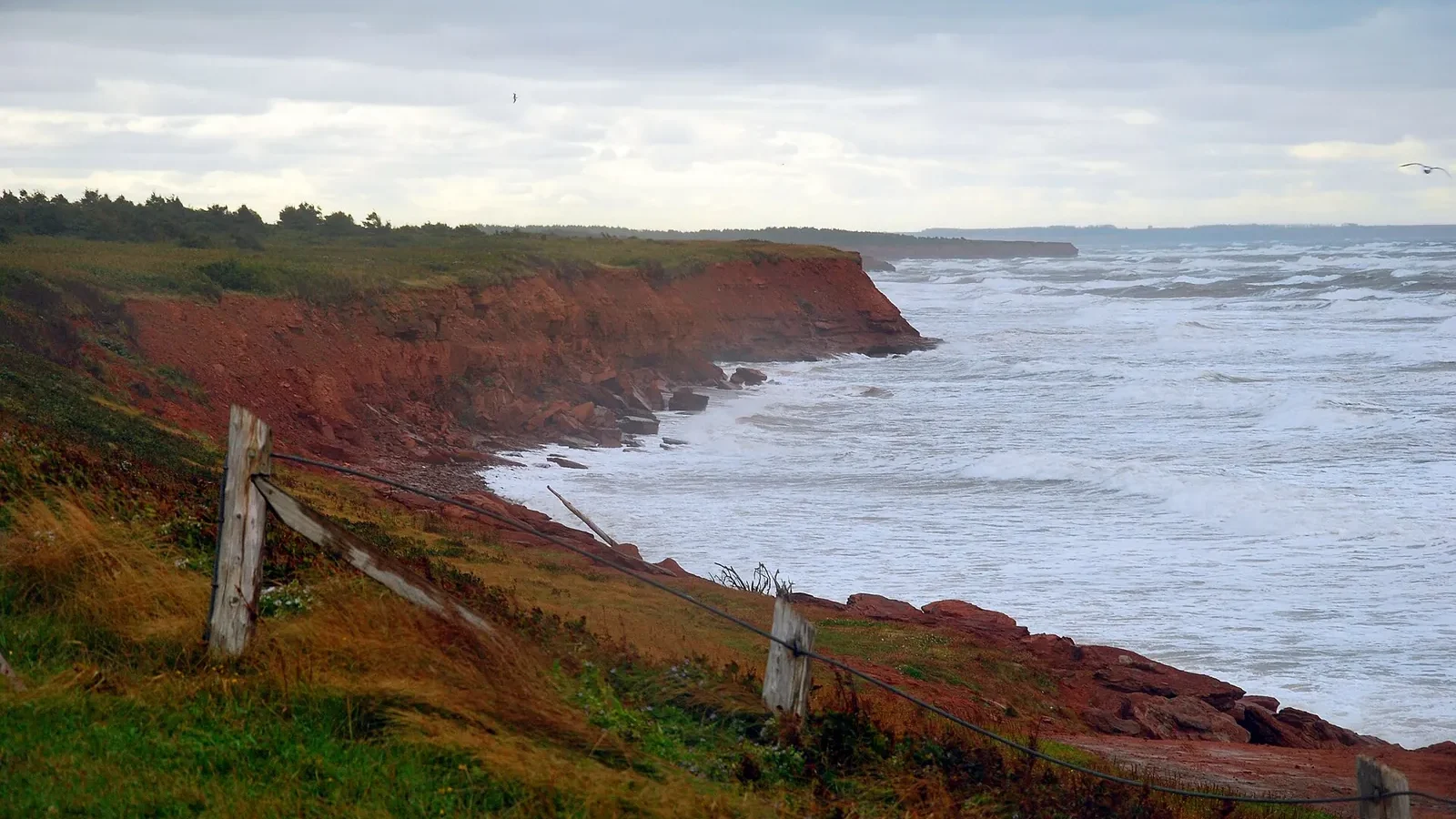
Prince Edward Island (PEI) is Canada’s smallest province — and one of its most charming. Farmland rolls gently down to golden or pinkish sand beaches backed by red sandstone cliffs. People come to swim, cycle, feast on mussels and lobster, and follow in the footsteps of Anne of Green Gables. In the Évangéline Region, the Island’s Acadians keep a lively French-speaking culture going too.
In this guide
PEI highlights
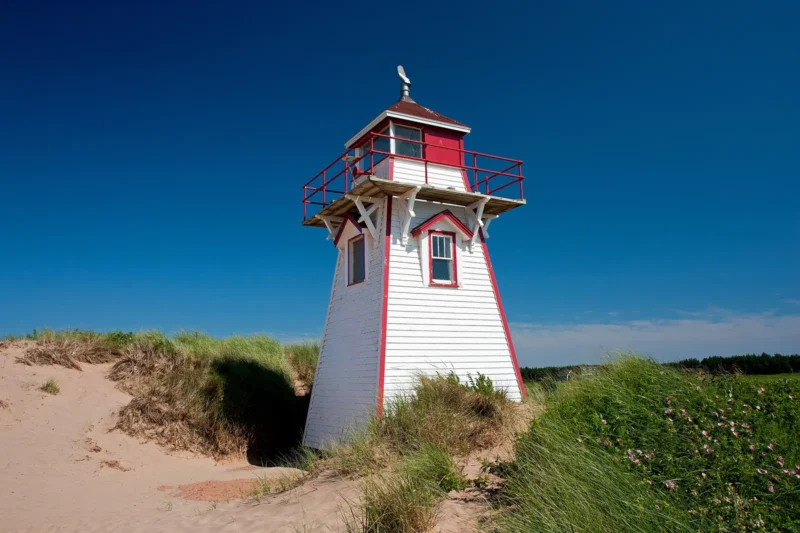
- Prince Edward Island National Park: Cavendish, Brackley and Stanhope beaches, the Greenwich dunes and Covehead Lighthouse.
- Cavendish and Green Gables Heritage Place, run by Parks Canada, in the world of Lucy Maud Montgomery.
- Charlottetown, the “Birthplace of Confederation,” with its historic downtown and waterfront.
- The Évangéline Region and the Acadian Museum in Miscouche.
- Basin Head and its “singing sands.”
- North Cape and East Point, the Island’s two tips.
- The Confederation Trail, a former railway turned bike path: 273 km tip to tip, 449 km including branch trails.
Our PEI guides
Our detailed plan, Prince Edward Island itinerary: 5 days, covers the Acadian west, the north shore and Cavendish, Charlottetown and the east coast, plus a 3-day version. Every article on the Island is listed below.
The Island’s three regions
| Region | Scenic drive | Highlights |
|---|---|---|
| West | North Cape Coastal Drive | Évangéline Region, West Point Lighthouse, North Cape |
| Centre | Central Coastal Drive | Cavendish, Green Gables, national park, Charlottetown |
| East | Points East Coastal Drive | Greenwich, Basin Head, East Point, Souris |
When to visit PEI
July and August are the best months for swimming: the Northumberland Strait has some of the warmest water in Eastern Canada. It’s also the busiest time in Cavendish, so book early. June is quiet and green, but the water is still cold. September is lovely for cycling and food, with the Fall Flavours festival. In winter the Island is very quiet and the ferry doesn’t run.
Getting to PEI
- Over the Confederation Bridge: 12.9 km (8 mi) from Cape Jourimain, New Brunswick, to Borden-Carleton — about 10 minutes, no reservation. The round-trip toll is collected when you leave the Island.
- By ferry from Caribou, Nova Scotia, to Wood Islands: 75 minutes, seasonal, several sailings a day in summer. Check in at least 40 minutes before departure.
- By air: Charlottetown airport, with connections through Toronto, Montréal and Halifax.
- Driving from Ontario or New England: plan on two long days from Toronto, or a long day from Boston via Maine and New Brunswick.
In by bridge, out by boat
Because both the bridge toll and the ferry fare are paid when you leave the Island, coming in by bridge and leaving by ferry to Nova Scotia means no backtracking and no paying twice.
Frequently asked questions
How many days do you need on PEI?
Three days gives you a good first taste; five days lets you see all three regions without rushing.
Do you pay to get onto Prince Edward Island?
No — the bridge toll and ferry fare are collected only when you leave, and they cover the round trip.
Where are the best beaches on PEI?
The national park beaches (Cavendish, Brackley, Stanhope), Basin Head and the Northumberland Strait beaches, where the water is warmest in summer.
Is PEI good for families?
Very. Distances are short, beaches are supervised in summer, and there are farms, easy trails and family attractions, especially around Cavendish.
Sources
- Tourism PEI (official site): tourismpei.com
- Confederation Bridge: confederationbridge.com
- Northumberland Ferries: ferries.ca
- Parks Canada, Prince Edward Island National Park and Green Gables Heritage Place: parks.canada.ca
- Acadian Museum of Prince Edward Island: peimuseum.ca