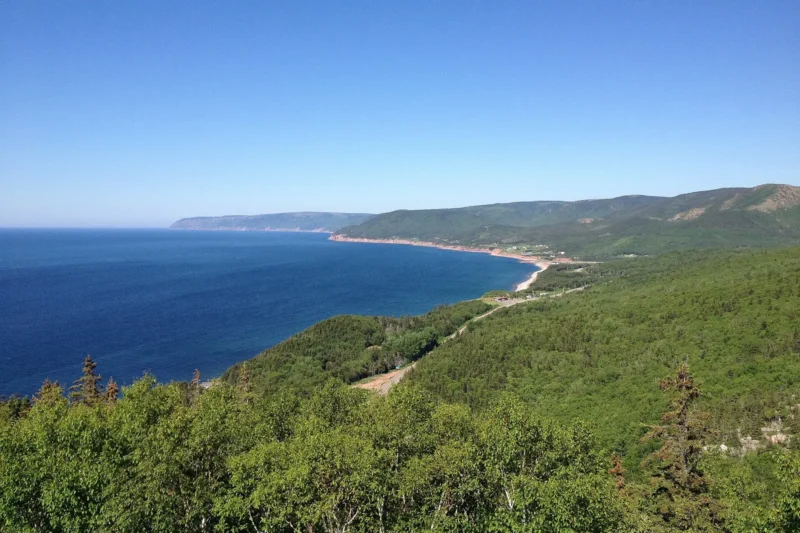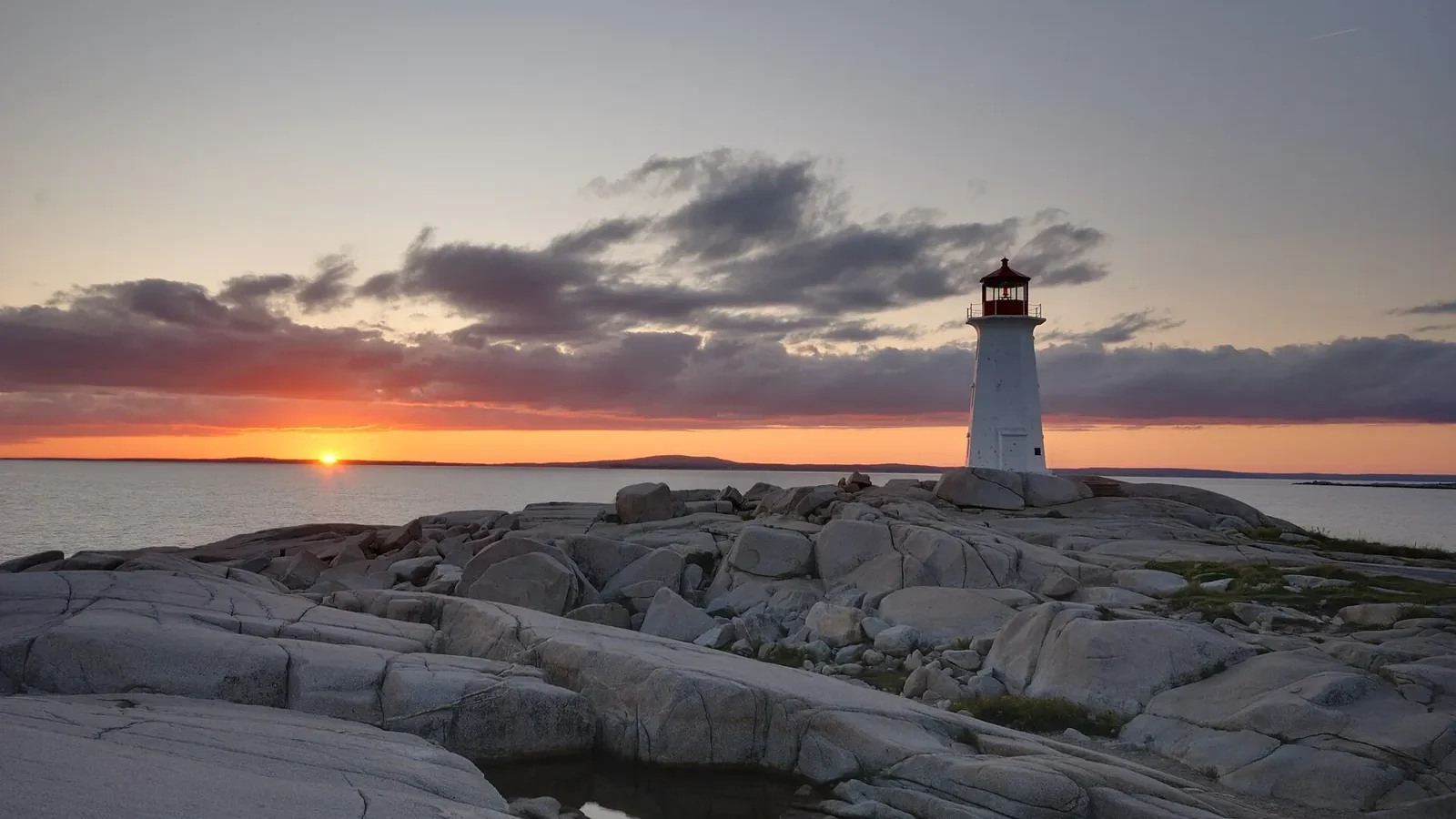
Almost entirely surrounded by the sea, Nova Scotia combines Atlantic Canada’s biggest city, Halifax, a ragged coastline dotted with lighthouses, and Cape Breton Island, home of the famous Cabot Trail. It’s also a land of Acadian and Celtic heritage: Grand Pré, St. Marys Bay, Chéticamp and Isle Madame still carry the memory and language of the Acadians, while Gaelic culture thrives on Cape Breton.
In this guide
Nova Scotia highlights
- Halifax: the waterfront boardwalk, the Citadel and Pier 21, where many immigrants first arrived in Canada.
- Peggy’s Cove: the province’s most photographed lighthouse, on a granite headland about 45 minutes from Halifax.
- Lunenburg: a colourful old town and UNESCO World Heritage Site.
- The Cabot Trail and Cape Breton Highlands National Park, including the Skyline Trail.
- Grand Pré and the Annapolis Valley: a UNESCO-listed Acadian landscape, wineries and Fundy tides.
- The Joggins Fossil Cliffs, the province’s third UNESCO site.
- Kejimkujik National Park, for canoeing, Mi’kmaw petroglyphs and dark skies.
- St. Marys Bay (Clare), the largest French-speaking Acadian region in the province.
Our Nova Scotia guides
Our flagship guide is the 3-day Cabot Trail itinerary: which direction to drive, the best lookoffs and hikes, where to stay and when to go. For the Nova Scotia side of the Bay of Fundy (Burntcoat Head, the Annapolis Valley), see our Bay of Fundy guide. Every article on the province is listed below.
How many days do you need?
| Time | Suggestion |
|---|---|
| 4–5 days | Halifax, Peggy’s Cove, Lunenburg and the South Shore |
| 7 days | Halifax and the South Shore, then 3 days on the Cabot Trail |
| 10–14 days | Add the Annapolis Valley, Grand Pré, Kejimkujik and St. Marys Bay |
When to visit Nova Scotia
July and August bring the warmest weather and full services — and the biggest crowds at Peggy’s Cove and on the Cabot Trail. September and early October are excellent: fall colours light up the Cape Breton Highlands, often peaking around mid-October, and the Celtic Colours International Festival fills the island with music. June has long, quiet days, but the coast can be foggy.
Getting to Nova Scotia
- By air: Halifax Stanfield International is Atlantic Canada’s main airport, with direct flights from across Canada including flights from the UK and Europe (some seasonal).
- By car: from New Brunswick via Amherst on the Trans-Canada Highway. From Toronto, allow two long days.
- By ferry: Saint John (NB)–Digby across the Bay of Fundy; Wood Islands (PEI)–Caribou; and, in season, Bar Harbor (Maine)–Yarmouth, a handy shortcut from New England. Ferries to Newfoundland leave from North Sydney.
The classic Maritimes loop
Drive in through New Brunswick, cross to PEI on the Confederation Bridge, take the Wood Islands–Caribou ferry to Nova Scotia, drive the Cabot Trail, then Halifax and the South Shore, and head home through the Annapolis Valley or on the Digby ferry.
Frequently asked questions
How many days do you need in Nova Scotia?
A week lets you combine Halifax, the South Shore and the Cabot Trail. With ten to fourteen days, add the Annapolis Valley, Kejimkujik and Acadian St. Marys Bay.
How long is the Cabot Trail?
The loop is 298 km (185 miles). You can drive it in a day, but three days lets you enjoy the lookoffs and hikes.
Can you visit Nova Scotia without a car?
Halifax is walkable and some tours run to Peggy’s Cove and Lunenburg, but to explore Cape Breton or the Annapolis Valley, a car is essentially required.
When do the leaves change on Cape Breton?
Usually from late September to mid-October, often peaking around mid-October depending on the year.
Sources
- Tourism Nova Scotia (official site): novascotia.com
- Parks Canada, Cape Breton Highlands and Kejimkujik national parks, Grand-Pré National Historic Site: parks.canada.ca
- UNESCO, Old Town Lunenburg, Landscape of Grand Pré, Joggins Fossil Cliffs: whc.unesco.org
- Bay Ferries (Saint John–Digby, Bar Harbor–Yarmouth): ferries.ca
- Marine Atlantic: marineatlantic.ca