The Gaspé Peninsula — la Gaspésie in French — juts out into the Gulf of St. Lawrence at the eastern end of Québec. For Quebecers, “doing the Gaspé tour” is almost a rite of passage; for travellers from Ontario, the US or the UK, it’s often the highlight of an Eastern Canada road trip. The full loop on Route 132 covers about 885 km (550 miles), from the rugged north shore to Forillon and Percé at the tip, then along the gentler Chaleur Bay coast.
Technically it’s part of Québec, not Atlantic Canada — but it pairs so naturally with New Brunswick (a bridge links Pointe-à-la-Croix to Campbellton) that we cover it as part of the region.
In this guide
Gaspé Peninsula highlights
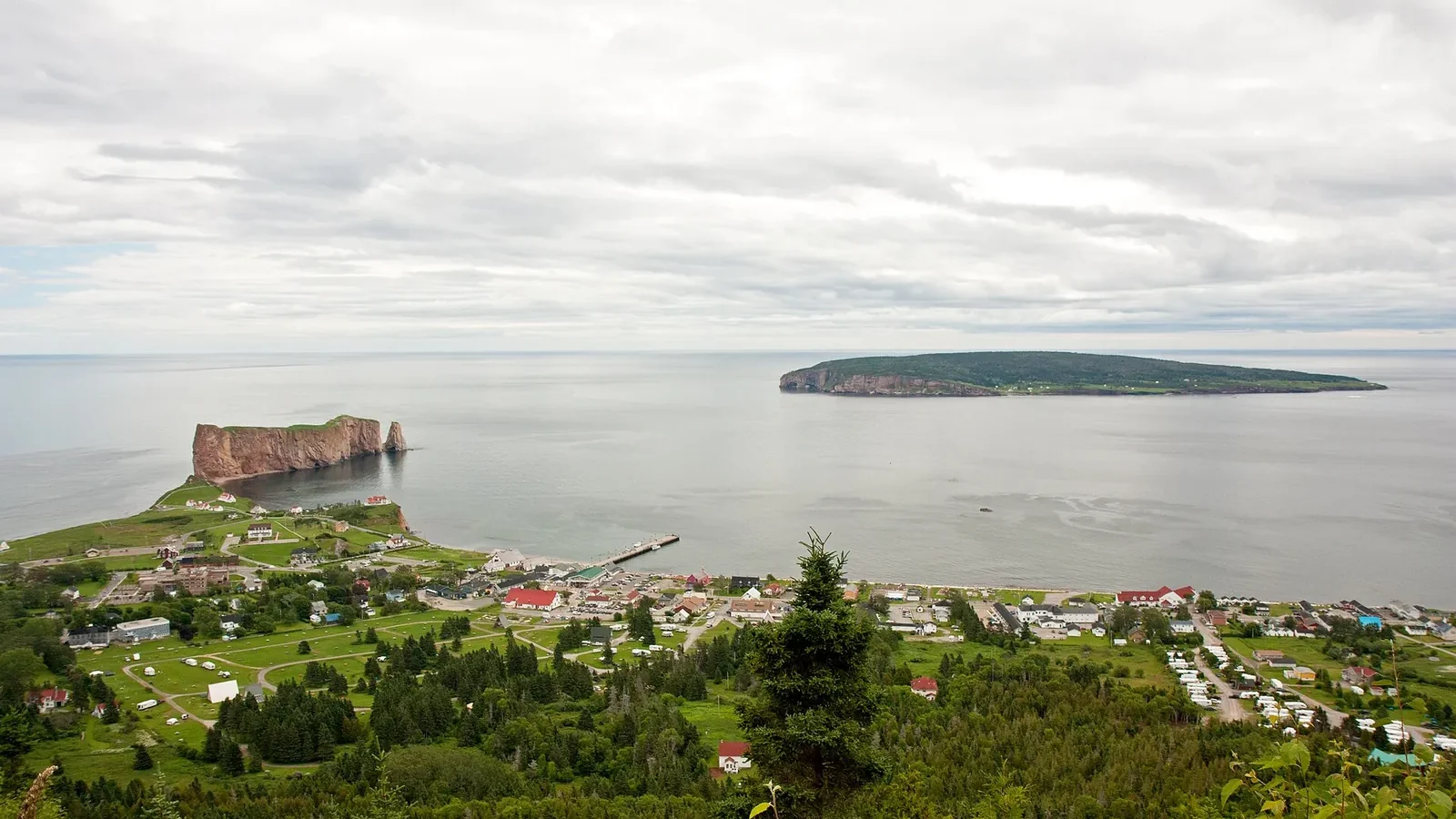
- Percé Rock: Québec’s most famous sea arch, at the heart of a UNESCO Global Geopark since 2018.
- Bonaventure Island: home to one of the world’s largest northern gannet colonies, reached by boat from Percé in season.
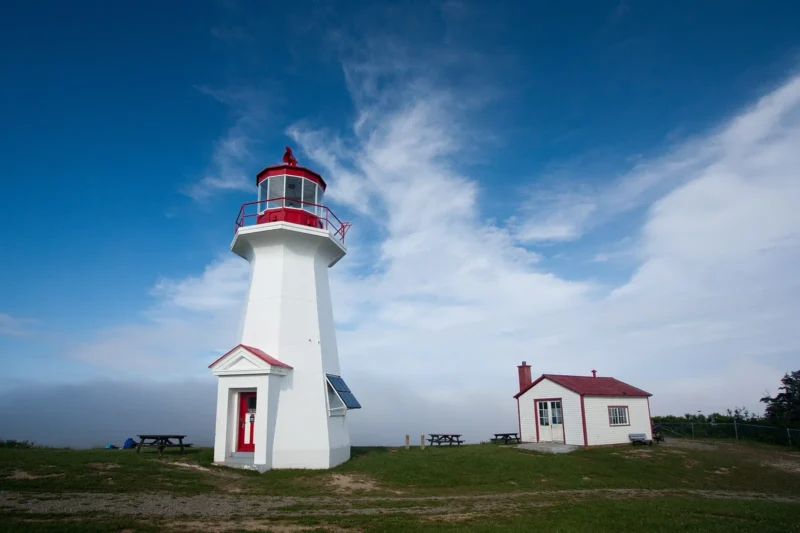
- Forillon National Park: the peninsula’s “land’s end,” with the Les Graves trail and Cap-Gaspé Lighthouse.
- Gaspésie National Park: the Chic-Choc and McGerrigle Mountains and the last caribou herd south of the St. Lawrence.
- Reford Gardens (Jardins de Métis) and Sainte-Flavie, the gateway to the loop.
- Miguasha National Park, a UNESCO World Heritage Site since 1999 for its fossil fish.
- Chaleur Bay: Carleton-sur-Mer, Bonaventure and the warmest beaches of the peninsula.
Our itineraries and guides
Start with our day-by-day plan: Gaspé Peninsula road trip itinerary, with distances, the best hikes, where to stay and how to adapt it to 5 or 10 days. Every guide we publish on the region is listed further down this page.
How many days do you need?
| Time | What you can do |
|---|---|
| 5 days | The full loop with lots of driving, plus Forillon and Percé |
| 7 days | The loop at a comfortable pace, with a day in Gaspésie National Park |
| 10 days | No rushing: hikes, Bonaventure Island and Chaleur Bay |
When to visit the Gaspé Peninsula
Peak season runs from late June to early September, when every service, boat tour and trail is open — and when Percé and Forillon book up months ahead. September is often the sweet spot: fewer people and the first fall colours in the mountains. Many businesses close in mid-September or by Canadian Thanksgiving (the second Monday of October), so check opening dates, especially for Bonaventure Island. In winter, the Chic-Chocs draw backcountry skiers.
Getting to the Gaspé Peninsula
- From Ontario: follow Highway 401 to Montréal, then Autoroute 20 and Route 132 to Sainte-Flavie. It’s a long day from Montréal and best split in two from Toronto (roughly 1,100 km to Sainte-Flavie).
- From the US: from New England, the most direct route is through Maine and New Brunswick, entering the loop at Campbellton–Pointe-à-la-Croix.
- By air: regional airports serve Gaspé and Mont-Joli, with connections through Montréal or Québec City. You’ll still need a rental car.
Speaking French
French is the everyday language on the Gaspé Peninsula. In hotels, parks and tourist areas you’ll usually get by in English, but a few words of French — bonjour, merci — go a long way, especially in small villages.
Combining the Gaspé with the Maritimes
The peninsula pairs beautifully with New Brunswick: from Chaleur Bay, the Acadian coast (Caraquet, Shippagan) is only a few hours away. A two-week loop can link the Gaspé, the Acadian Peninsula, Prince Edward Island and Nova Scotia. Remember that New Brunswick is on Atlantic Time — one hour ahead of the Gaspé.
Frequently asked questions
How long is the Gaspé Peninsula loop?
The full Route 132 loop is about 885 km (550 miles), according to Bonjour Québec. With detours into the parks, expect 1,000 km or more.
How many days do you need for the Gaspé Peninsula?
Seven days lets you drive the loop at a pleasant pace. Five days is doable but involves a lot of driving; ten days leaves time for hiking and Chaleur Bay.
When is the best time to visit the Gaspé?
Late June to mid-September, when everything is open. September often offers the best balance of weather, colour and calm.
Do I need to speak French on the Gaspé Peninsula?
No, but it helps. French is the main language; English is generally spoken in hotels, parks and tourist businesses.
Sources
- Bonjour Québec, Gaspésie tour: bonjourquebec.com
- Tourisme Gaspésie (official site): tourisme-gaspesie.com
- Sépaq, Gaspésie, Île-Bonaventure-et-du-Rocher-Percé and Miguasha national parks: sepaq.com
- Parks Canada, Forillon National Park: parks.canada.ca
- UNESCO, Percé Global Geopark and Miguasha National Park: unesco.org