Picking the best beaches on PEI is a nice problem to have. Canada’s smallest province is ringed with sand: long white beaches and dunes on the north shore, red sand and calmer water on the south shore, and “singing” sands out east. The real question is which one fits your day: lifeguarded or wild, wheelchair-friendly, close to Charlottetown, or open to dogs.
Here are ten beaches in three areas, with what Parks Canada and Tourism PEI say about lifeguards, facilities and rules. For the big picture, see our Prince Edward Island hub and our PEI itinerary: 5 days.
At a glance
- North shore (national park): wide white-sand beaches and dunes at Cavendish, Brackley, Stanhope and Greenwich, with surfguards from late June to Labour Day.
- South shore: generally warmer water, because the Northumberland Strait is shallow, but redder, rockier beaches.
- Water temperature: August is the warmest month, averaging about 18°C (65°F), according to Tourism PEI.
- Dogs: banned from all national park beaches April 1 to October 15; allowed on leash in several provincial parks.
- Before you go: surf conditions on PEI Now (national park) and lifeguard schedules on Tourism PEI’s Beach Reports.
In this guide
- North shore or south shore: where is the water warmest?
- Best beaches on PEI at a glance
- The national park: Cavendish, Brackley and Stanhope
- Eastern PEI: Greenwich, Basin Head, Red Point and Panmure
- South and west: red sand and sunsets
- Beach safety: lifeguards, flags and currents
- Dogs, dunes and Piping Plovers
- Getting to the beaches
- Which beach should you choose?
- Frequently asked questions
- Sources
North shore or south shore: where is the water warmest?
On the north side, facing the Gulf of St. Lawrence, Prince Edward Island National Park protects a thin ribbon of beaches, dunes and red sandstone cliffs. On the south side, along the Northumberland Strait, the beaches are more sheltered.
On its “Ask an Islander” forum, Tourism PEI explains that south shore water tends to be warmer because the strait is shallow and the shore is protected from prevailing breezes. South shore beaches are less sandy, though, with more rock and clay. North shore water takes longer to warm up, but almost all of those beaches are sandy, which makes them the best for sunbathing, picnics and kids.
How warm does the water get?
According to Tourism PEI, August is the warmest month for water around the Island, averaging about 18.2°C (65°F), with little difference between north and south. The water often stays pleasant into September. These are averages: an offshore wind can cool things down from one day to the next. If you’ve swum on New Brunswick’s warm Acadian coast, the south shore of PEI faces the same strait.
Best beaches on PEI at a glance
| Beach | Area | Coast | Lifeguards (summer) | Dogs | From Charlottetown |
|---|---|---|---|---|---|
| Cavendish | National park | North | Yes | Not on beach | 45 km (28 mi), 45–55 min |
| Brackley | National park | North | Yes | Not on beach | 23 km (14 mi), 25–35 min |
| Stanhope | National park | North | Yes | Not on beach | 28 km (17 mi), 30–40 min |
| Greenwich | National park | Northeast | Yes | Not on beach | 62 km (39 mi), 1 h – 1 h 15 |
| Basin Head | Provincial park | East | Scheduled | Not stated | 91 km (57 mi), 1 h 30 – 1 h 45 |
| Red Point | Provincial park | East | Scheduled | On leash in park | 89 km (55 mi), 1 h 25 – 1 h 40 |
| Panmure Island | Provincial park | Southeast | Scheduled | Not stated | 67 km (42 mi), 1 h – 1 h 15 |
| Chelton | Provincial park | South | Scheduled | On leash in park | 63 km (39 mi), 1 h – 1 h 15 |
| Cabot Beach | Provincial park | Malpeque Bay | Scheduled | On leash in park | 64 km (40 mi), 1 h – 1 h 15 |
| Cedar Dunes | Provincial park | Southwest | Scheduled | On leash in park | 132 km (82 mi), 2 h – 2 h 30 |
Driving distances are approximate. “Scheduled” means Tourism PEI lists lifeguard service whose days and hours vary, so check Beach Reports on the day.
The national park: Cavendish, Brackley and Stanhope
The national park has three areas: Cavendish–North Rustico, Brackley–Dalvay and Greenwich. An entry fee applies (free for youth 17 and under); in 2026, admission was free from June 19 to September 7. Check the park website for next season’s fees.
Cavendish Beach
The Island’s most famous beach sits in the heart of Anne of Green Gables country. Parks Canada describes a stretch of white sand framed by rolling dunes and iconic red cliffs. A long, flat boardwalk leads to washrooms, a canteen (mid-June to early September) and picnic areas, then crosses the dunes to the sand by stairs or a multi-level ramp. There are outdoor showers too, and the Dunelands trailhead is next to the boardwalk.
It gets busy on hot days: in peak season, PEI Now shows surf conditions and parking availability. To pair a swim with Green Gables and North Rustico, follow day 2 of our 5-day PEI itinerary.
Brackley Beach
Tourism PEI calls Brackley the closest north shore beach to Charlottetown. It has surfguards, washrooms, a ramp, mobility mats and beach wheelchairs. From the beach complex, the car-free Robinsons Island trail (3.2 km / 2 mi one way) takes walkers and cyclists to a quieter stretch of sand.
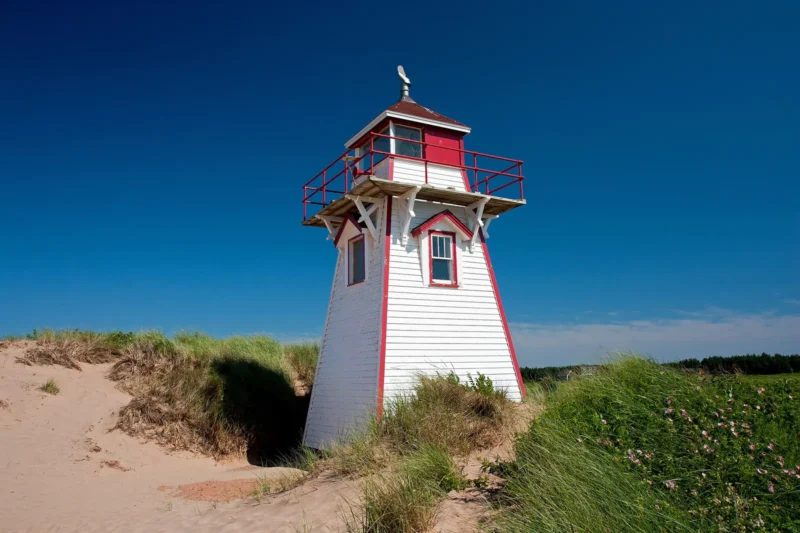
A word of caution from Parks Canada: at Robinsons Island and in Covehead Bay, narrow channels can create strong outflow currents, especially as the tide changes. Farther east, the beaches at Covehead Lighthouse and Dalvay have limited parking and no lifeguards. Jumping off the Covehead Bridge is prohibited.
Stanhope Beach
Parks Canada calls Stanhope the most accessible beach in the national park: an 80 m (260 ft) flat boardwalk, then a gentle 60 m (200 ft) ramp with a landing midway, and mobility mats at the base of the ramp from early July to early September. You’ll find washrooms, outdoor showers, a playground and a sheltered picnic area, and the Stanhope campground is close by.
Beach wheelchairs
Parks Canada lends beach wheelchairs, including buoyant models, by reservation at least 48 hours ahead (902-566-7050 or pnipe-peinp@pc.gc.ca, monitored on weekdays).
Eastern PEI: Greenwich, Basin Head, Red Point and Panmure
Greenwich and its parabolic dunes
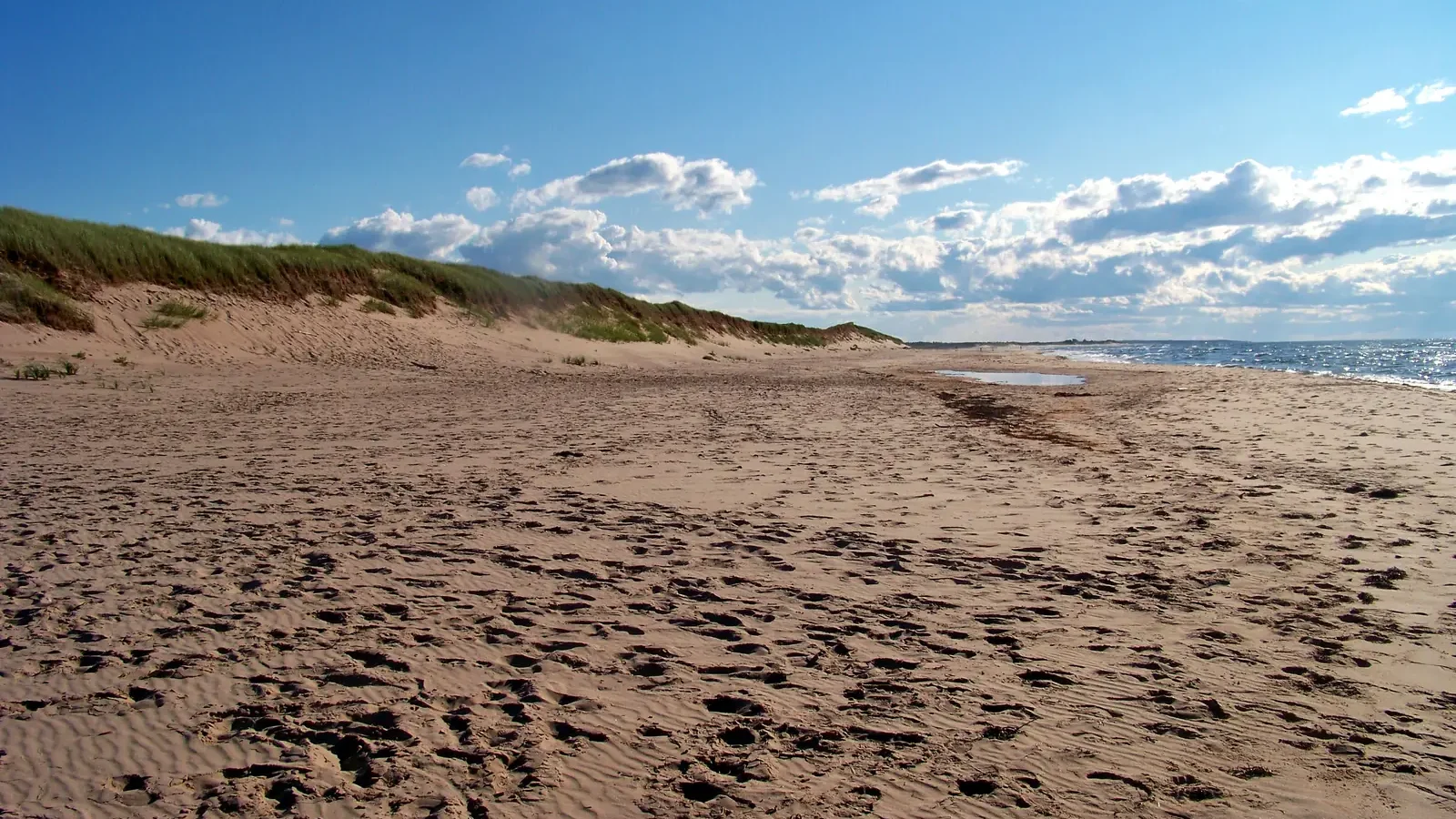
Added to the national park in 1998, Greenwich is home, says Parks Canada, to the biggest sand dunes on Prince Edward Island. Its large, mobile, horseshoe-shaped parabolic dunes are a very rare phenomenon in North America. There are two ways to reach the water:
- Greenwich Beach, supervised in summer, with a solar-powered beach facility (washrooms, change rooms, outdoor showers, a large picnic shelter) and a boardwalk to the sand;
- the Greenwich Dunes trail (4.6 km / 2.9 mi return, per Parks Canada’s 2026 brochure), which crosses Bowley Pond on a floating boardwalk before climbing over the dune. Bikes aren’t allowed on the floating boardwalk.
Between Thanksgiving and Victoria Day, trails and stairs aren’t maintained.
Basin Head: the “singing sands”
At the eastern tip of the Island, near Souris, the beach at Basin Head Provincial Park is famous for white sand that “sings” when you walk on it, thanks to its high silica content, according to Tourism PEI. A channel locals call “the run” splits the beach in two. The park has scheduled lifeguards, concessions, washrooms and the Basin Head Fisheries Museum on the bluff above the beach. A beach mat runs from the wharf to the water, and a floating wheelchair is available when surf conditions allow.
Behind the beach, the lagoon has been a Marine Protected Area since 2005: Fisheries and Oceans Canada protects a unique type of Irish moss there, and disturbing or removing marine life is prohibited.
Red Point
About ten minutes from Souris, Red Point Provincial Park looks out over the Northumberland Strait, with beaches and sandstone cliffs, according to Tourism PEI. Expect a supervised beach, playground, showers and a campground; pets are allowed on leash in the park.
Panmure Island
Joined to the mainland by a causeway with water on both sides, Panmure Island is, according to Tourism PEI, one of the most picturesque spots on the Island. The provincial park offers a long white-sand beach with scheduled lifeguards, a beach house with change rooms, showers and toilets, a restaurant and a campground. The nearby lighthouse, the oldest wooden lighthouse on PEI, is open to visitors in season.
South and west: red sand and sunsets
Chelton Beach
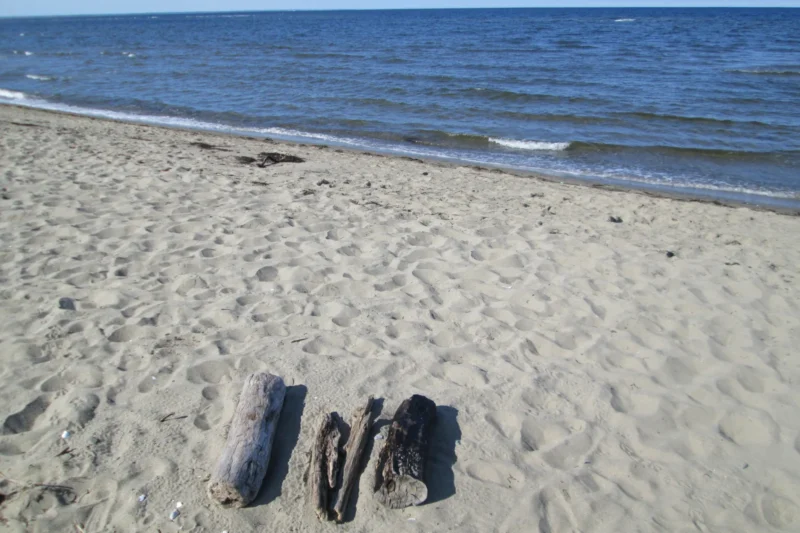
About 15 minutes from the Confederation Bridge, Chelton Beach is a classic south shore beach: red sand and warmer water, according to Tourism PEI. Small waves make it good for paddleboarding and kayaking, and at low tide you can beachcomb with a view of the bridge. With showers, washrooms and a playground, it’s an easy first swim when you arrive on the Island.
Cabot Beach (Malpeque)
On Malpeque Bay, Cabot Beach Provincial Park combines a supervised beach, wooded trails and wide green spaces, with a 104-site campground and free parking, according to Tourism PEI. Cavendish is about 40 minutes away.
Cedar Dunes and Jacques Cartier (west coast)
At the far western end, Cedar Dunes Provincial Park has a beach that stretches for miles along the strait, next to the West Point Lighthouse, and it’s known for its sunsets. Farther north, Jacques Cartier Provincial Park faces the Gulf with a slender, supervised sandy beach; the explorer came ashore here in 1534, Tourism PEI notes. Near the Wood Islands ferry, Northumberland Provincial Park offers a shallow beach with red sand.
Beach safety: lifeguards, flags and currents
On the north shore, surf can build quickly. Parks Canada and Tourism PEI both recommend swimming at a supervised beach, between the flags.
| Flag (national park) | Meaning |
|---|---|
| Red | Dangerous surf, no swimming |
| Yellow | Moderate surf |
| Green | Calm surf |
| Orange | Strong offshore winds |
| Purple | Jellyfish |
Flags fly only during supervised hours, so no flag doesn’t mean the water is safe. In 2026, Parks Canada surfguards were on duty from June 26 (Cavendish, Brackley) or June 27 (Stanhope, Greenwich) to September 7; check the park website for next season’s schedule.
Rip currents and pool floaties
If a current pulls you away from shore, don’t fight it: swim parallel to the beach to get out of it, then head back in, or float and wave for help. Pool floaties (loungers, inner tubes and other inflatables) are banned in the water at national park beaches because of offshore winds; life jackets and water wings for kids are still allowed.
A few more precautions:
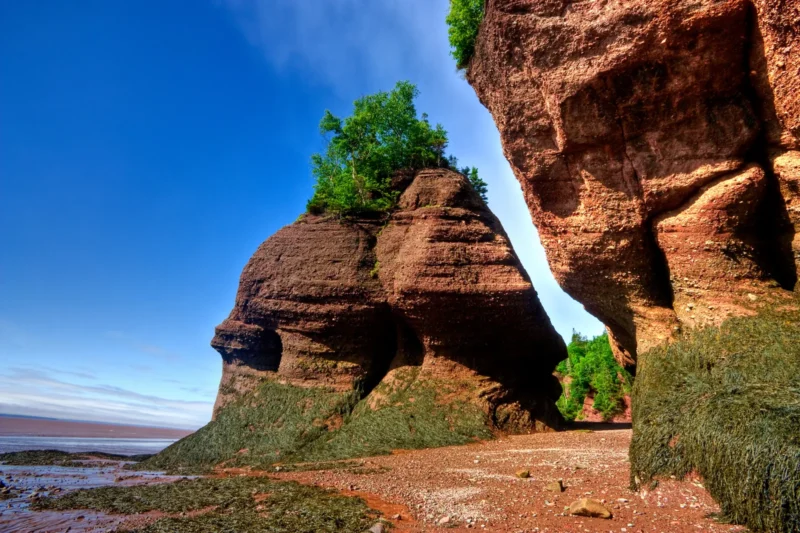
- Cliffs: the red sandstone crumbles easily, and the shoreline erodes by about 1 m (3 ft) a year on average, according to Tourism PEI. Stay well back from both the edge and the base.
- Tides: in the national park they range from a few centimetres to over 2 m (6.5 ft). On a rising tide, make sure you can get back along the cliffs.
- Small streams: Parks Canada advises against letting children play in the outflow streams that cross the beach, as the water may carry elevated bacteria levels; signs go up if weekly tests show high counts.
Dogs, dunes and Piping Plovers
In the national park, pets are prohibited on all beaches from April 1 to October 15 to protect the endangered Piping Plover, which nests on the sand. Dogs are still welcome on leash (3 m / 10 ft max) on trails and in campgrounds. Respect closed areas when plovers are nesting, and stay on boardwalks: the dunes are fragile.
On the provincial side, Tourism PEI lists pets on leash as permitted at Red Point, Chelton, Cabot Beach, Cedar Dunes, Jacques Cartier and Northumberland.
Getting to the beaches
You reach the Island by the Confederation Bridge (12.9 km / 8 mi, from New Brunswick) or by the roughly 75-minute ferry from Caribou, Nova Scotia, to Wood Islands. The bridge toll is collected only when you leave the Island; check current rates on the official sites. PEI is on Atlantic Time, one hour ahead of Toronto and Boston.
| From | To | Distance (approx.) | Driving time (approx.) |
|---|---|---|---|
| Halifax | Cavendish Beach (via the bridge) | 315 km (195 mi) | 3 h 45 – 4 h 30 |
| Moncton | Cavendish Beach | 160 km (100 mi) | 2 h 15 – 2 h 45 |
| Boston | Cavendish Beach | 1,010 km (630 mi) | 11 h 30 – 13 h |
| Toronto | Cavendish Beach | 1,690 km (1,050 mi) | 20 – 22 h |
From Boston, the drive runs through Maine and New Brunswick, with a border crossing; from Toronto, it’s a two-day trip through Quebec and New Brunswick, so plan an overnight stop. Many travellers from farther away fly into Halifax or Charlottetown and rent a car, since the beaches are spread out.
Which beach should you choose?
- With young kids: Stanhope or Brackley, both supervised, accessible and close to Charlottetown.
- For photos: Cavendish and its red cliffs, or the Greenwich dunes.
- For warmer water: the south shore at Chelton, or Basin Head out east.
- With a dog: a provincial park such as Cabot Beach or Red Point rather than the national park.
- For quiet: Panmure Island or Cedar Dunes.
These beaches slot easily into a longer trip: our Maritimes road trip: 10 days spends three days on the Island (days 4 to 6), between New Brunswick and Nova Scotia.
Frequently asked questions
What is the most beautiful beach on PEI?
It depends on what you’re after. Cavendish is the best known, with its dunes and red cliffs. Greenwich stands out for its parabolic dunes, and Basin Head for its singing sands. Near Charlottetown, Brackley and Stanhope are supervised and easy to reach.
Where is the warmest water on PEI?
According to Tourism PEI, the south shore tends to be a little warmer, thanks to the shallow, sheltered Northumberland Strait. August is the warmest month, with water averaging about 18°C (65°F) around the Island.
Do PEI beaches have lifeguards?
In summer, yes. The national park supervises Cavendish, Brackley, Stanhope and Greenwich from late June to Labour Day. Several provincial parks, including Basin Head, Panmure Island and Cabot Beach, also have lifeguards, but days and hours vary, so check Tourism PEI’s Beach Reports.
Can I bring my dog to the beach on PEI?
Not on national park beaches between April 1 and October 15. Several provincial parks, such as Cabot Beach, Red Point and Chelton, allow pets on leash.
Why does the sand sing at Basin Head?
According to Tourism PEI, Basin Head’s white sand has a high silica content, which makes it squeak or “sing” when you walk on it.
Sources
- Parks Canada, supervised beaches (2026 schedule): parks.canada.ca/pn-np/pe/pei-ipe/activ/natation-swim/plages-beaches
- Parks Canada, swimming and national park beaches: parks.canada.ca/pn-np/pe/pei-ipe/activ/natation-swim
- Parks Canada, water safety: parks.canada.ca/pn-np/pe/pei-ipe/securite-safety/nautique-water
- Parks Canada, you and your dog / Piping Plover: parks.canada.ca/pn-np/pe/pei-ipe/visit/chien-dog
- Parks Canada, Greenwich and 2026 brochure: parks.canada.ca/pn-np/pe/pei-ipe/visit/greenwich
- Tourism PEI, beaches and provincial parks: tourismpei.com/what-to-do/beaches-parks
- Tourism PEI, beach safety and Beach Reports: tourismpei.com/what-to-do/beaches-parks/beach-safety-reports
- Fisheries and Oceans Canada, Basin Head Marine Protected Area: dfo-mpo.gc.ca/oceans/mpa-zpm/basin-head
- Tourism PEI, Ask an Islander (water temperature, north vs south shore): tourismpei.com/askanislander
- Confederation Bridge, tolls: confederationbridge.com